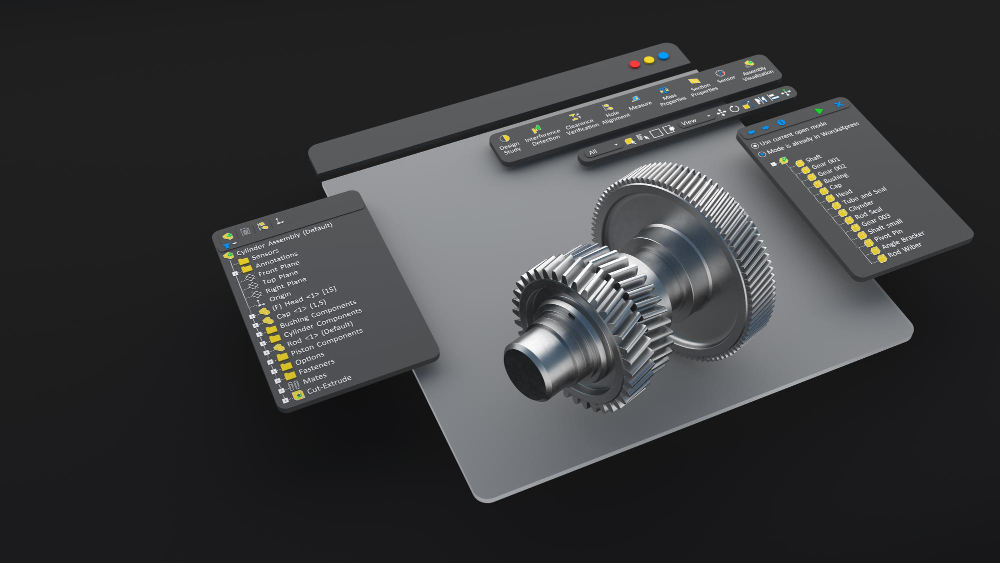
Computer-Aided Design (CAD) refers to the use of computer technology to create, modify, analyze, and optimize designs. CAD systems are used to produce both two-dimensional (2D) drawings and three-dimensional (3D) models, allowing designers and engineers to visualize products from any angle, including internal views.
CAD supports the entire design process by documenting materials, dimensions, tolerances, and manufacturing intent with high precision. These digital models can then be analyzed, simulated, and prepared for production using specialized printers, plotters, or manufacturing systems. CAD is also commonly referred to as Computer-Aided Design and Drafting (CADD).
What CAD Is Used For
CAD enables the creation of detailed engineering designs for physical components and assemblies. It is widely used to develop concept designs, product layouts, structural strength analysis, motion studies, and manufacturing workflows.
In architecture and urban planning, CAD is used to generate visual impact studies, helping stakeholders understand how new structures will appear once built. These visualizations play a key role in decision-making and approvals.
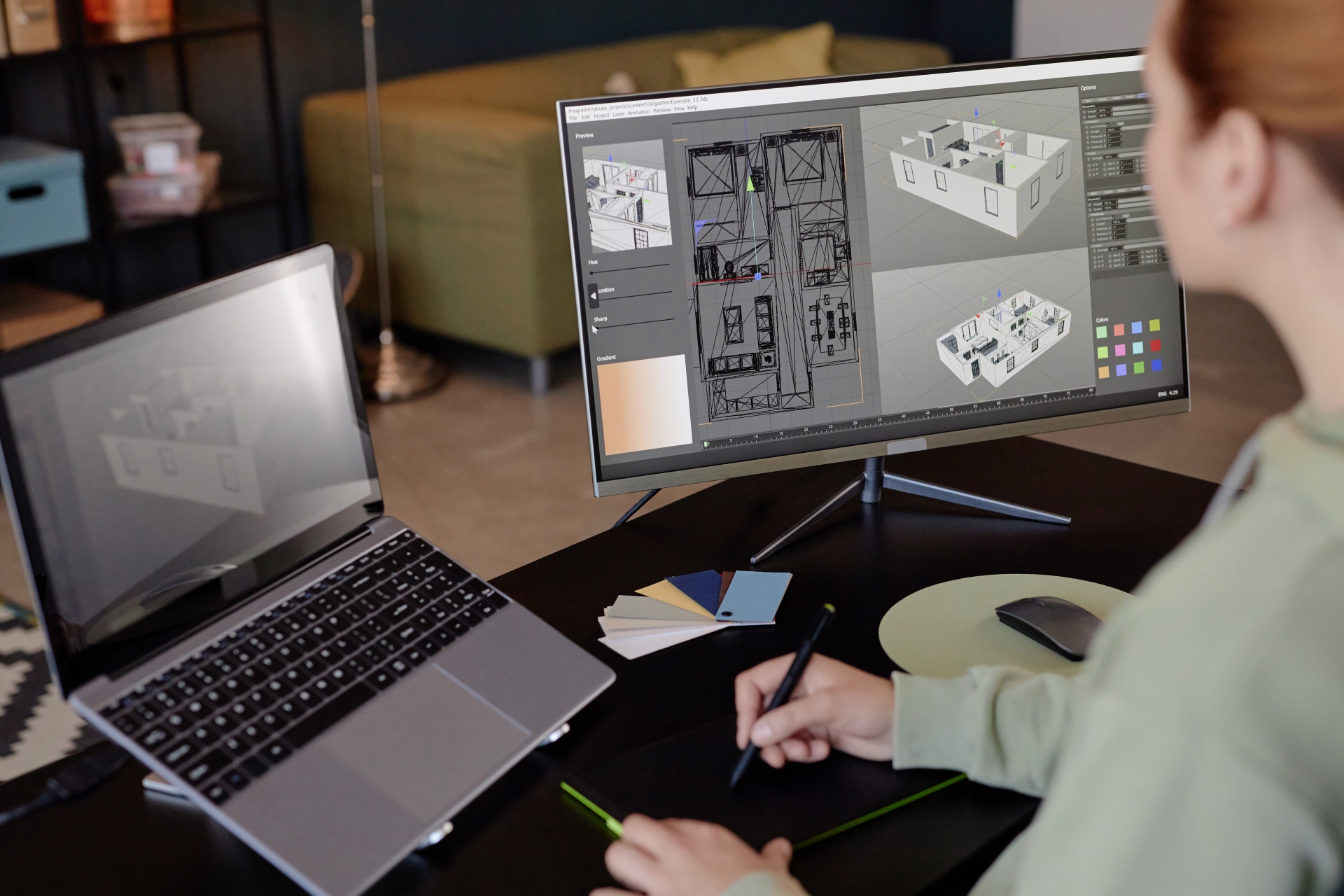
Today, CAD solutions are available for all major operating systems, including Windows, Linux, Unix, and macOS. Interaction is typically mouse-based, but advanced input devices such as pens, digitizing tablets, space mice, and even stereoscopic visualization tools are also supported.
CAD in Education and Industry
Over the past decades, universities have largely replaced manual drafting courses with CAD-based training. As hardware and software costs decreased, CAD became accessible to students and professionals alike, transforming design workflows and significantly reducing development time.
The CAD industry has been evolving for more than 60 years and continues to advance rapidly. The foundations of CAD were established in the late 1950s, when early numerical control systems laid the groundwork for modern digital design.
A Brief History of CAD
Early CAD development closely followed the evolution of computers themselves. For decades, pencil and paper were the primary tools for drafting. CAD eventually replaced these methods, becoming a fundamental tool across nearly every industry.
Key milestones in CAD history include the introduction of graphical interfaces, parametric modeling, standardized exchange formats, and the widespread adoption of 3D solid modeling. These advances revolutionized engineering, architecture, and manufacturing by enabling precision, repeatability, and rapid iteration.
The CAD Industry Today
Modern CAD systems integrate design, simulation, and manufacturing data into a single digital workflow. CAD/CAM solutions now support the entire lifecycle of a product—from concept and engineering to fabrication and quality control.
As computing power increased, CAD tools became faster, more intuitive, and more accessible to small and medium-sized companies, fueling innovation across industries.
The Future of CAD Software
CAD technologies continue to evolve to meet the needs of modern users. The growing adoption of 3D printing, cloud computing, and advanced simulation is reshaping how CAD tools are designed and used.
Key trends shaping the future of CAD include automation, artificial intelligence, cloud-based collaboration, virtual reality, and increased customization.
Automation and Artificial Intelligence
Automation and AI are becoming central to modern CAD systems. Intelligent tools can assist with error detection, design optimization, and repetitive tasks, allowing designers to focus on creativity and problem-solving.
Generative and regenerative design tools are emerging, enabling software to automatically generate multiple design alternatives based on defined constraints and performance goals.
Cloud-Based CAD
Cloud-based CAD platforms allow users to access designs from anywhere, collaborate in real time, and eliminate the need for complex license management. These Software-as-a-Service (SaaS) solutions improve teamwork, version control, and data security.
Cloud CAD also enables workflow analytics, helping organizations track design efficiency and optimize processes.
Virtual Reality and Advanced Visualization
Visualization technologies are narrowing the gap between digital models and real-world perception. Virtual reality allows designers to experience 3D models at full scale, improving spatial understanding and design validation.
Customization and Specialization
CAD software is becoming increasingly specialized, with tools tailored to specific industries such as electronics, architecture, jewelry, and product design. Customizable interfaces allow users to optimize their workspace for efficiency and usability.
CAD Interoperability Challenges
As organizations adopt multiple CAD systems, interoperability has become a critical challenge. Translating models between platforms without losing design intent, tolerances, or metadata remains complex.
Differences in how CAD kernels handle geometry, tolerances, and data structures can lead to gaps, surface errors, or incomplete models when files are exchanged. Standards such as IGES and STEP help, but are not without limitations.
The MBD Trend
Model-Based Definition (MBD) embeds manufacturing information directly into 3D models, reducing reliance on 2D drawings. While this approach improves efficiency, it also adds complexity to data exchange and interoperability.
Products Designed Using CAD
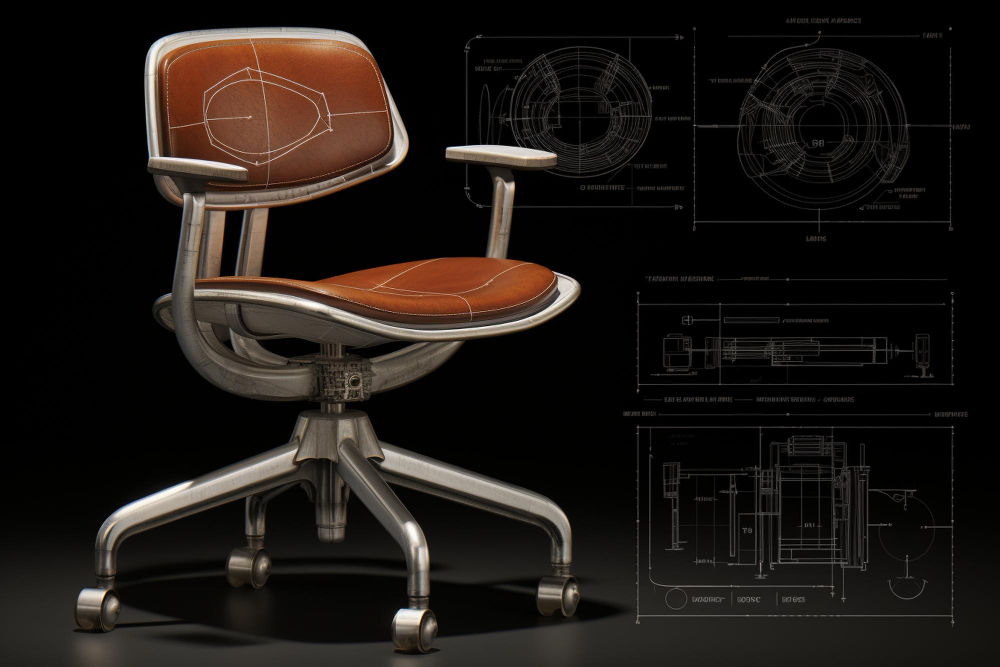
Today, CAD is used to design an immense range of products, from consumer electronics and furniture to medical devices and industrial equipment. In many cases, CAD is so fundamental that it is easier to identify products not designed using it.
CAD-driven design has enabled iconic products by supporting precision, experimentation, and manufacturability across disciplines.