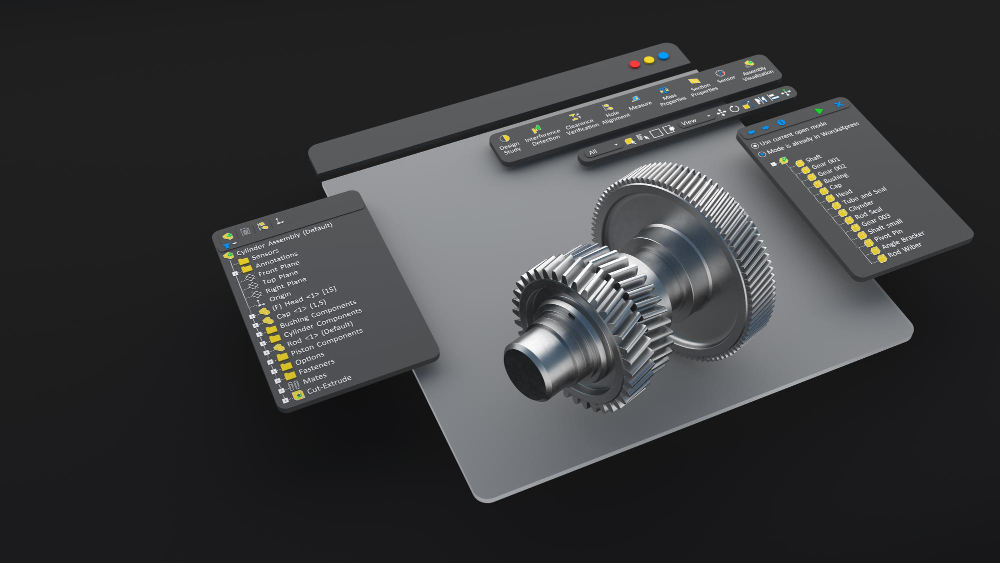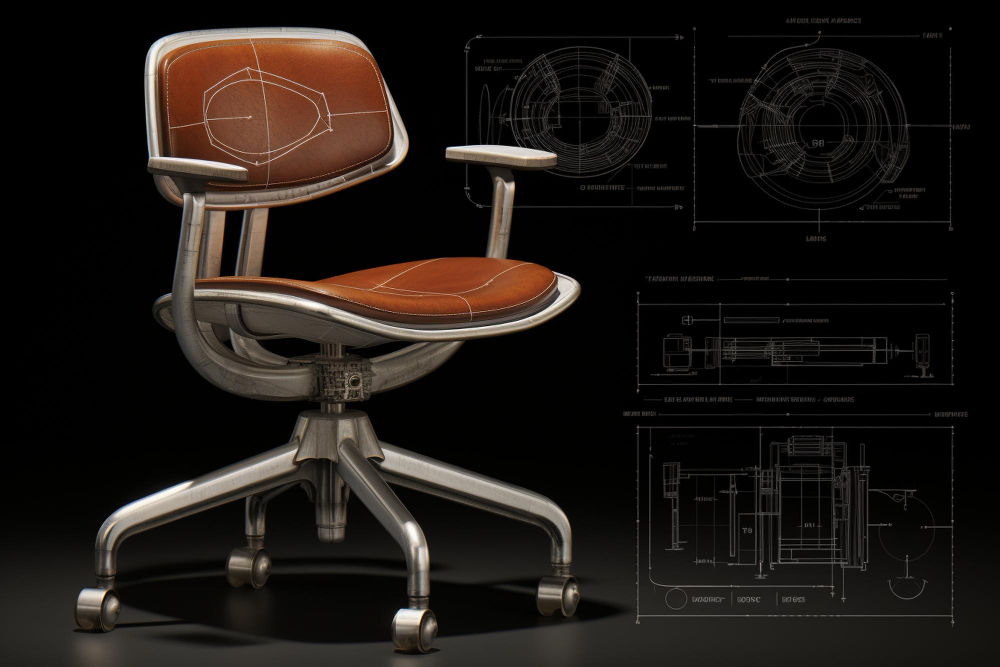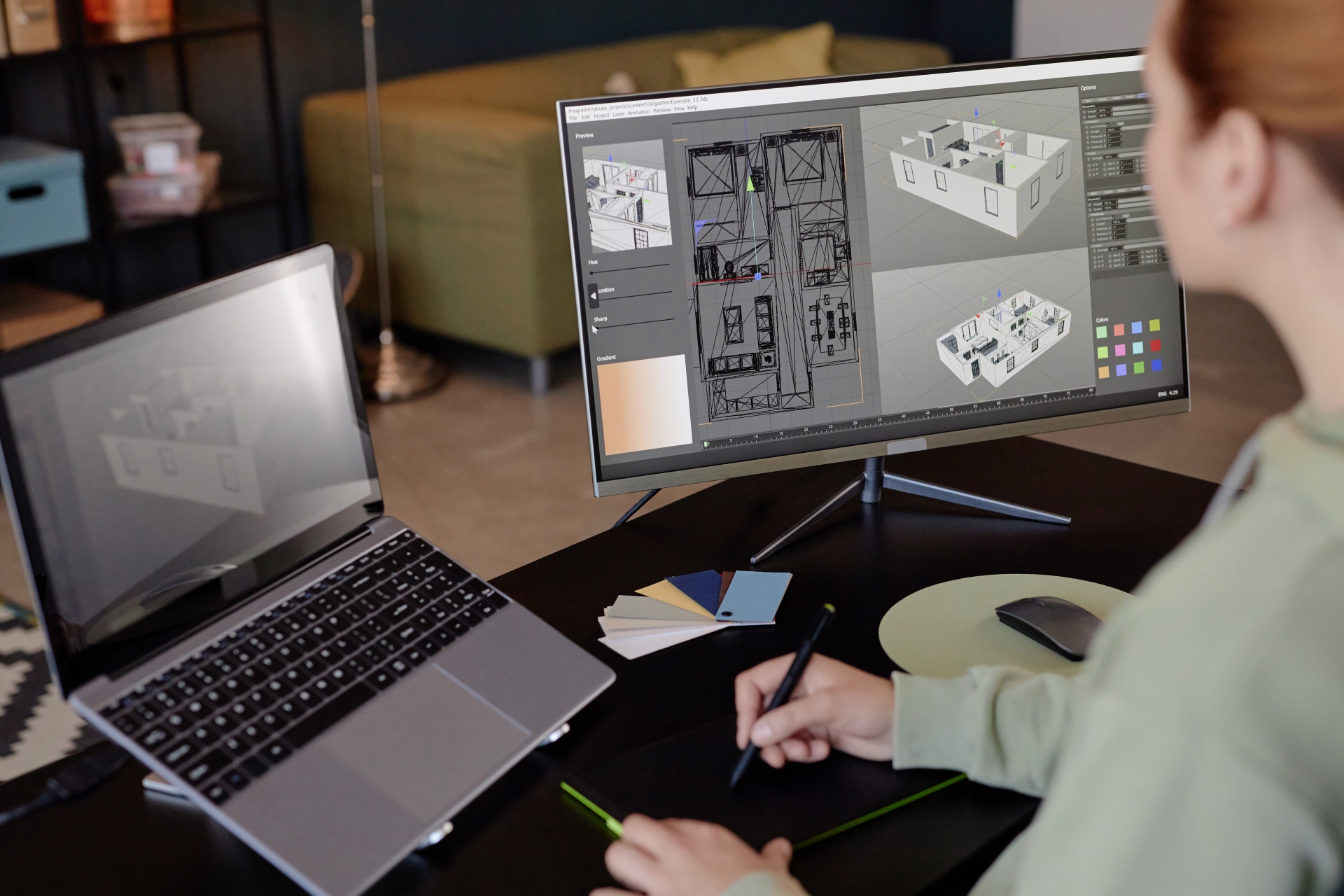
In today’s fast-paced world of innovation, Computer-Aided Design (CAD) software stands as a cornerstone technology, enabling design CAD technicians, engineers, and artists to lead industries and enhance our world. CAD software is the essential tool for crafting precision drawings, technical illustrations, and complex models that underpin virtually every modern creation. From breathtaking artistic visions to meticulously engineered blueprints and plans, CAD empowers professionals to transform abstract concepts into tangible, presentable designs with incredible accuracy and detail.
What Do Design Professionals Use CAD For?
The versatility of CAD software makes it indispensable across a multitude of industrial sectors. Architects leverage CAD to design intricate building plans, drafters create detailed technical schematics, engineers develop complex mechanical parts, and artists bring elaborate sculptures and visual designs to life. Essentially, any professional requiring highly precise or technical 2D drawings and 3D models relies on CAD software to bring their visions to fruition.
Exploring the Versatility: Types of CAD Modeling
CAD encompasses a range of modeling techniques to suit diverse project requirements. Designers typically utilize five primary types of CAD in their projects:
- 2D Flat Drawings: Traditional orthographic and isometric views, essential for plans and schematics.
- 2.5D Prismatic Models: Offering depth to 2D designs, often used for extruded parts.
- 3D Models: Full three-dimensional representations, providing comprehensive spatial data.
- 3D Wireframe and Surface Modeling: Ideal for complex, free-form shapes, focusing on edges and surfaces.
- Solid Modeling: Creates complete, volumetric 3D objects, crucial for manufacturing and analysis.
This diverse capability has fundamentally revolutionized the drafting field, simplifying tasks like drawing lines and shapes, taking precise measurements, and accurately scaling designs. A robust CAD solution, such as SolidFace offers, is designed to accommodate all these different design styles, adapting to the specific needs of every professional.
The Unparalleled Benefits of CAD Software
Before the advent of CAD technology, design technicians and professionals faced immense challenges with manual drafting. Conceptualizing, sketching, and refining designs was a labor-intensive process fraught with inefficiencies. Scaling, editing, or making last-minute changes to a drawing often meant hours of painstaking adjustments—or, in the worst-case scenario, completely redrawing a project from scratch. This manual approach severely hampered productivity and frequently led to missed deadlines and increased stress for designers. Thankfully, CAD software transformed this landscape, making the design process dramatically easier, faster, and infinitely more productive for professionals across the globe.
Achieving Unmatched Precision and Speed
One of the most profound advantages of modern CAD software is its ability to facilitate the creation of exceptionally accurate drawings in a fraction of the time required by traditional methods. CAD systems empower users to achieve levels of precision that are simply unattainable with manual tools such as pencils, pens, and paper. This unprecedented combination of speed and accuracy allows professionals to rapidly iterate designs, validate concepts, and deliver flawless technical documentation with ease.
Dynamic Interaction and Seamless Integration
CAD software elevates the design experience by offering dynamic interactive capabilities. Designers can effortlessly zoom in on intricate details, rotate objects to view them from any angle, and manipulate components with unprecedented control—all within the virtual workspace. Furthermore, advanced CAD solutions often provide seamless integration with other computer programs, enhancing the overall design workflow and boosting efficiency. Tasks such as drawing a precisely measured, scaled line are magnitudes easier and faster in CAD than through tedious manual methods.
Simplified Scaling and Measurement
In manual drafting, designers traditionally had to pre-determine the scale of a view before even beginning their drawing, a process prone to error and requiring meticulous planning. CAD software completely eliminates this hurdle. A significant benefit of CAD is its inherent ability to simplify scaling. Professionals can effortlessly select their preferred units of measurement and begin drawing at a true 1:1 scale, with the flexibility to adjust view scales later for presentation or documentation purposes. This capability saves enormous amounts of time and reduces potential mistakes.
Streamlined Layout and Virtual Work Environments
The layout process itself is far more intuitive and convenient with CAD software compared to manual methods. Gone are the days of selecting pre-printed sheets with fixed borders and title blocks, followed by the agonizing task of meticulously planning the placement of plans, elevations, sections, and details. CAD transforms the design process from a chore into a creative endeavor, significantly boosting productivity.
Unlike manual drafting, CAD allows designers to create their models and designs in a dynamic, virtual “model space.” Once the design is finalized, professionals can easily transition to a “paper space” environment to create multiple layouts, complete with title blocks and viewports, ready for printing or digital distribution. This separation of design creation and presentation ensures maximum flexibility and efficiency.
Enhanced Organization Through Layering
One of the most powerful and flexible features of CAD software is its sophisticated layering system for organizing drawing information. Manual drafting required the cumbersome use of multiple transparent overlays to separate different types of information, such as architectural plans, structural components, plumbing, and electrical systems. This method was not only physically bulky but also prone to errors and difficult to manage.
CAD software, however, allows users to logically separate design elements onto distinct layers within a single file. This means you can easily toggle the visibility of specific components—like electrical wiring or HVAC systems—making complex designs clearer, easier to edit, and simpler to present. This streamlined organization significantly improves collaboration, reduces clutter, and enhances overall project clarity.
Embrace the Future of Design with CAD
From accelerating workflows and boosting precision to simplifying complex layouts and fostering unparalleled organization, CAD software has truly transformed the landscape of design and engineering. It’s not merely a tool; it’s a gateway to innovation, enabling professionals to push the boundaries of what’s possible. Investing in a comprehensive CAD solution empowers you to create with confidence, efficiency, and artistic freedom.